Find your
next move
A free, private decision tool for one real decision when certainty is not available.
Why people
get stuck
Most people get stuck because they try to solve the whole future before they move.
Hard decisions rarely give you certainty first.
This app gives you one light pass through three questions.
What does good look like?
What is the Next Event?
Can you live with the Tolerable Worst Case?
It will not teach the full model. It will help you use it once, on one decision.
About
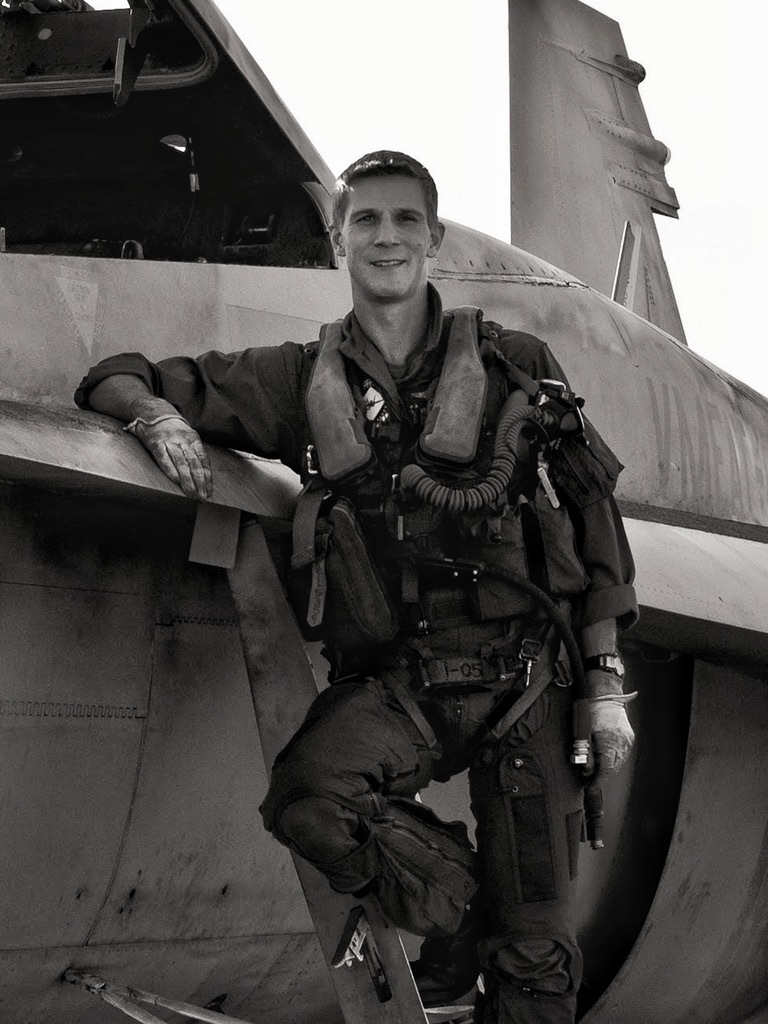
Paul Littlejohn
Paul Littlejohn is a former RAF fighter pilot, operational leader, and executive advisor.
He flew operational missions over Iraq, instructed on the F/A-18 with the US Marine Corps, and later led large-scale international operations across aviation and travel businesses.
This app comes from the way he learned to decide when waiting for certainty was rarely an option.
What does good look like?
When you are stuck, it is easy to focus on the decision in front of you and lose sight of what the decision is for.
This step helps you zoom out. Before you choose a move, define what a good enough result would look like. Not perfect. Useful.
What should this decision protect, solve, make clearer, or make possible?
In one sentence. Do not make it perfect.
What would be better, clearer, protected, solved, or possible if this went well enough?
Choose the few things you are not willing to lose sight of.
Restate the decision now that you can see what it is for.
What is the nearest useful move?
You do not need the whole plan. You need the next useful move.
Choose a move that makes real progress and helps you learn what is true next.
Small, real actions. Not whole plans.
Choose the move that moves things forward and helps you learn what is true next.
If it depends on too many guesses about what happens later, make it smaller or nearer.
Name the action, person if relevant, and timing.
Can you live with the worst case?
You cannot remove all the risk before you act.
What you can do is name the realistic worst case and decide whether it is one you can live with. If you can live with it, act. If you cannot, make the move smaller, safer, or better protected.
Not the disaster story. The realistic consequence.
Could you absorb it, repair it, explain it, or recover from it?
Reduce the exposure. Test it first. Add a mitigation. Change the route until the realistic worst case is one you can live with.
A decision is not finished when you act. Choose a time to review what changed.
You have run one clear pass.
You have not solved the whole future. You have defined what matters, chosen the next useful move, and checked whether the downside is one you can live with. Now act, then look again.
Still tangled?
Some decisions have too many moving parts for a light tool: people, money, timing, risk, politics, or competing pressures.
Bring it to a 1:1 decision session. We will work through your actual situation and leave with a clear next move you can act on.
Book a Decision SessionPrefer to ask first? [email protected]
Want to learn the full model?
This app gives you one light pass through a real decision. Become Decisive teaches the decision-making discipline behind it, with the teaching, practice, scenarios, and reps that make the model usable under pressure.
Learn the Full ModelHelp me make this better.
I don't collect any data from this app. Your answers stay on your device. But this is a free tool, and the only way I know if it works is if people tell me. 20 seconds, if you can spare it.